
What Is the Best Age to Get LASIK?
As an eye doctor practicing in Saginaw, one of the most common questions I hear from patients is simple: “What is the Best Age to Get LASIK?” It’s a smart question—and an important one. While LASIK is a highly effective vision correction procedure, timing plays a critical role in achieving long-lasting, satisfying results.
I’m Dr. Melanie Mihlstin, and in this guide, I’ll walk you through how age affects LASIK candidacy, what to expect at different life stages, and how to determine the best age to get LASIK based on your unique vision needs.
Why Age Matters in LASIK Surgery
When evaluating a patient for LASIK, age isn’t just a number—it reflects the stability and health of your eyes. Your vision changes over time, and these changes directly impact whether it’s the Best Age to Get LASIK for you.
There are three key factors I assess:
- Vision Stability – Your prescription should remain unchanged for at least 1–2 years.
- Eye Health – Conditions like dry eye, thin corneas, or cataracts can affect eligibility.
- Age-Related Changes – Natural aging processes, like presbyopia, influence outcomes.
Because of these variables, the best age to get LASIK is less about hitting a specific number and more about meeting the right conditions.

LASIK in Your Early 20s: Is It Too Soon?
Technically, you can undergo LASIK at age 18. However, just because you can doesn’t mean it’s the best age to get LASIK.
In your early 20s, your eyes may still be changing. Many patients experience subtle prescription shifts during this time. Performing LASIK too early can result in the need for enhancement procedures later.
That said, some patients in their mid-to-late 20s do qualify. If your prescription has been stable and your eyes are healthy, this stage can be the best age to get LASIK for early intervention.
LASIK in Your Late 20s to 30s: The Ideal Window
For many patients, this is often the best age to get LASIK.
Here’s why:
- Your prescription is typically stable
- Your eyes are still healthy and resilient
- Healing response is strong
- You can enjoy long-term benefits before age-related changes begin
In my clinical experience, patients in their late 20s and 30s tend to achieve the most predictable and lasting results. This is the stage where LASIK offers the greatest return on investment—both financially and in quality of life.
If you’re asking me when the best age to get LASIK is from a purely clinical standpoint, this age range is often my answer.
LASIK in Your 40s: What Changes?
As patients enter their 40s, a natural condition called presbyopia begins to develop. This affects your ability to focus on near objects, which is why many people start needing reading glasses.
At this stage, the question shifts slightly from “What is the best age to get LASIK?” to “What type of vision correction is best for me now?”
LASIK can still be a great option in your 40s, but expectations must be adjusted. While LASIK can correct distance vision, it does not stop the natural aging process of the eye.
Some patients opt for:
- Monovision LASIK (one eye for distance, one for near vision)
- Continued use of reading glasses after surgery
For the right candidate, this can still be the best age to get LASIK, especially if distance vision is your priority.
LASIK in Your 50s and Beyond
Patients in their 50s and 60s often ask if they’ve missed the best age to get LASIK. The answer is: not necessarily—but it depends.
At this stage, we carefully evaluate for:
- Cataracts
- Lens changes
- Overall eye health
In some cases, procedures like refractive lens exchange (RLE) may be more appropriate than LASIK. However, if your eyes are healthy and free from significant age-related conditions, LASIK can still be performed successfully.
That said, for most patients, this is not typically considered the best age to get LASIK, simply because other vision correction options may provide better long-term outcomes.
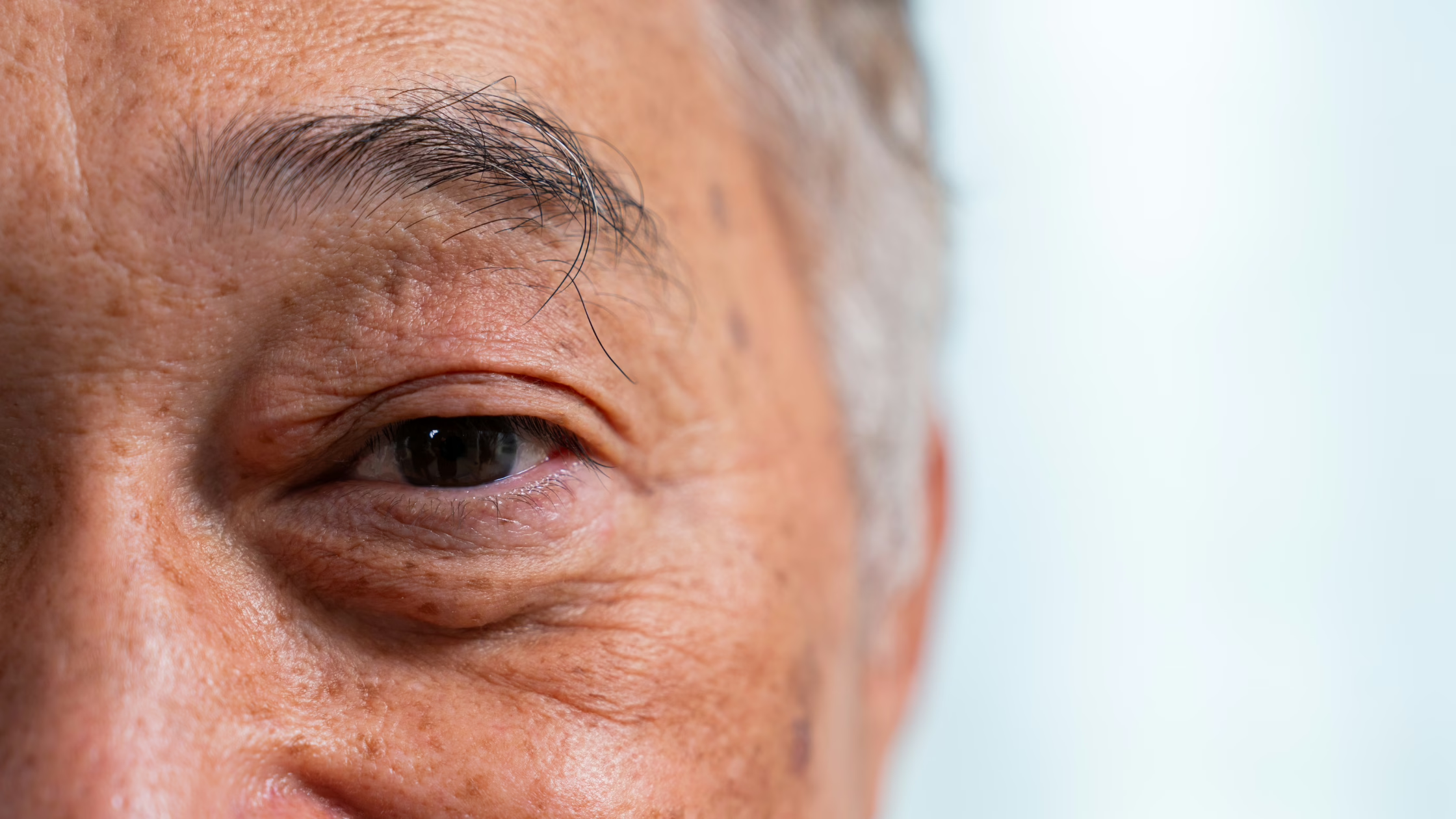
How Vision Stability Determines the Best Timing
If there’s one factor I emphasize most, it’s this: stability matters more than age alone.
You could be 25 or 35—but if your prescription is still changing, it’s not the Best Age to Get LASIK yet.
On the other hand, a patient in their early 40s with stable vision and healthy eyes might be at the Best Age to Get LASIK for their specific situation.
Here’s what we look for:
No Prescription Changes for 12–24 Months
Stable vision is one of the most critical indicators that your eyes are ready for LASIK. When your prescription continues to shift—even slightly—it means your eye is still changing shape, particularly the cornea. Performing LASIK during this phase can lead to undercorrection or overcorrection over time, which may require enhancement procedures later.
In my practice, I carefully review your prescription history over the past one to two years. Even a minor change in your glasses or contact lens prescription can signal instability. When your vision has remained consistent for at least 12–24 months, it tells me that your eyes have reached a level of maturity where LASIK results are more likely to be accurate and long-lasting.
No Active Eye Conditions
Healthy eyes are essential for both the safety of the procedure and the quality of your results. Conditions such as dry eye syndrome, keratoconus, corneal infections, or chronic inflammation can interfere with healing and affect visual outcomes. Even something as common as untreated dry eye can lead to discomfort and fluctuating vision after surgery.
Before recommending LASIK, I conduct a thorough evaluation of your ocular surface and internal eye health. If any condition is present, we address it first—whether that means treating dryness, managing inflammation, or exploring alternative procedures. LASIK is an elective procedure, so we never rush into it without ensuring your eyes are in optimal condition to heal properly and deliver clear, stable vision.
Realistic Expectations About Results
LASIK is designed to reduce your dependence on glasses or contact lenses, but it’s important to understand that it does not create “perfect” or permanently unchanging vision. The goal is functional, high-quality vision for your daily activities—not necessarily flawless eyesight under every condition.
I always have an honest conversation with patients about what LASIK can and cannot do. For example, you may still need reading glasses as you age, especially after your 40s. Night vision changes, such as halos or glare, can also occur in some cases, though they are often temporary. When patients have a clear and realistic understanding of the outcomes, they tend to be much more satisfied with their results.
This is why a comprehensive eye exam is essential before determining the Best Age to Get LASIK.
Does LASIK Last Forever?
Another common concern tied to the best age to get LASIK is longevity.
LASIK permanently reshapes your cornea, but it does not stop your eyes from aging. This means:
- Your corrected vision is long-lasting
- Age-related changes (like presbyopia) will still occur
Choosing the best age to get LASIK helps maximize how long you enjoy clear vision without additional correction.
Patients who undergo LASIK in their late 20s or 30s often experience decades of improved vision before needing reading glasses.
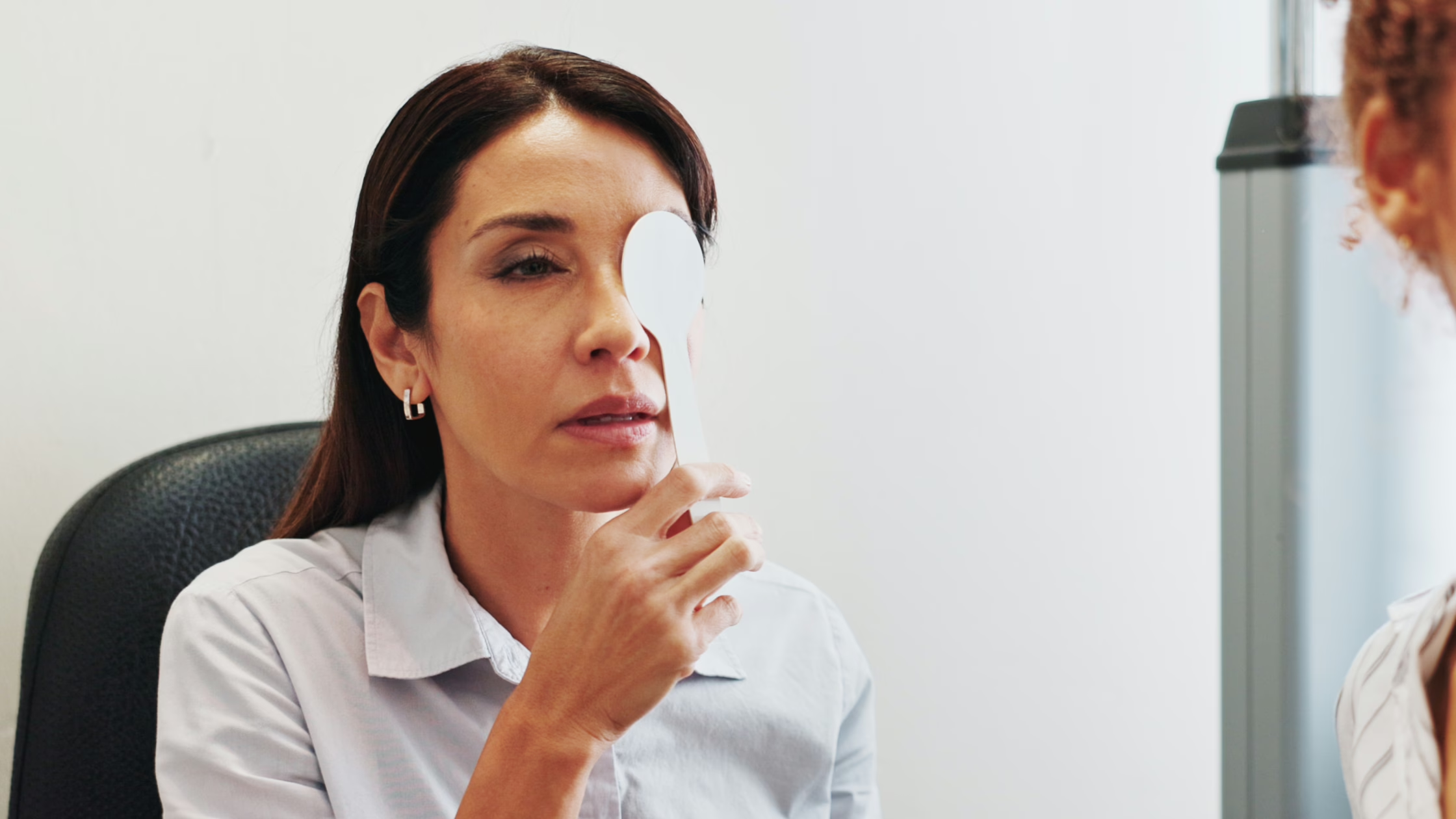
When You Should Delay LASIK
There are situations where it’s better to wait—even if you’re within the typical best age to get LASIK range.
You may need to delay if:
- Your prescription is still changing
- You have untreated dry eye
- You’re pregnant or nursing (hormonal changes affect vision)
- You have certain corneal conditions
In these cases, waiting ensures better outcomes and helps you reach the true best age to get LASIK for your eyes.
Personalized Evaluation: The Real Answer
Here’s the truth I tell every patient: there is no universal best age to get LASIK—only the best age for you.
While general guidelines are helpful, your eyes are unique. Factors like lifestyle, career, and long-term vision goals all play a role.
For example:
- A young professional tired of glasses may benefit from earlier treatment
- A patient approaching presbyopia may need a different strategy
- An older patient may be better suited for lens-based procedures
This is why a personalized consultation is the most important step in identifying your best age to get LASIK.
Final Thoughts from Dr. Melanie Mihlstin
Determining the Best Age to Get LASIK isn’t about rushing into surgery—it’s about choosing the right moment for lasting results. In my experience, the late 20s to 30s range offers the most ideal conditions, but I’ve seen excellent outcomes across many age groups when the timing is right.
If you’re considering LASIK, focus on stability, eye health, and long-term expectations rather than just age. That’s how we achieve results that truly improve your daily life.
If you’re in the Saginaw area and exploring your options, I always recommend starting with a thorough evaluation. MiVision take a comprehensive approach to assessing candidacy and guiding patients through their decision without pressure.
Ultimately, the best age to get LASIK is when your eyes—and your goals—are aligned.