
What Is PureSee IOL? A Complete Guide for Patients
Clear vision is something many people take for granted—until cataracts begin to interfere with daily life. If you’ve started exploring treatment options, you’ve likely come across different types of intraocular lenses (IOLs), including the PureSee IOL. This advanced lens is gaining attention for its ability to provide a more natural visual experience after cataract surgery.
In this guide, we break down what PureSee IOL is, how it works, its benefits, and whether it may be the right choice for you.
What Is PureSee IOL?
The PureSee IOL is a type of extended depth of focus (EDOF) intraocular lens used in cataract surgery. Unlike traditional monofocal lenses that correct vision at a single distance, PureSee is designed to provide a continuous range of vision—from far to intermediate—with functional near vision.
During cataract surgery, your eye’s natural clouded lens is removed and replaced with an artificial lens. The PureSee IOL takes this a step further by optimizing how light enters the eye, helping you see more clearly across different distances without relying heavily on glasses.
How Does PureSee IOL Work?
PureSee IOL uses advanced optical technology to extend your range of vision while maintaining clarity. Instead of splitting light into multiple focal points (like multifocal lenses), it stretches the focus into a smooth visual range.
This design helps reduce visual disturbances such as halos and glare, which are common concerns with some premium lenses. The result is a more natural transition between distances, allowing you to perform everyday tasks—like driving, working on a computer, or watching TV—with minimal visual interruption.

Key Benefits of PureSee IOL
Continuous Range of Vision
The PureSee IOL provides a seamless transition between distance and intermediate vision, with functional support for near tasks. Instead of forcing your eyes to switch between fixed focal points, it allows you to see more fluidly across different ranges. This makes everyday activities—like using your phone, working on a laptop, cooking, or driving—feel more natural and less visually disruptive.
Reduced Halos and Glare
One of the common concerns with premium lenses is the presence of halos and glare, especially at night. PureSee IOL addresses this by avoiding the splitting of light into multiple focal points, which is often the cause of these visual disturbances. As a result, many patients report clearer night vision and greater confidence when driving in low-light conditions.
More Natural Visual Experience
PureSee IOL is engineered to replicate how the natural eye processes light, rather than forcing artificial focal zones. This leads to a smoother visual experience where objects appear more consistent and less “layered” or distorted. Patients often describe their vision as more comfortable and intuitive, especially when transitioning between different distances throughout the day.
Greater Independence from Glasses
While no lens can guarantee complete freedom from glasses, PureSee IOL significantly reduces dependence on them for most daily activities. Many patients find they no longer need glasses for tasks like watching TV, using a computer, or running errands. Although reading glasses may still be needed for very fine print, overall reliance on corrective eyewear is noticeably lower.
High Contrast Sensitivity
Contrast sensitivity plays a crucial role in how well you can distinguish objects from their background, particularly in dim lighting. PureSee IOL is designed to maintain strong contrast, helping you see more clearly in situations like nighttime driving or low-light indoor environments. This added clarity improves both safety and visual comfort in real-world settings.
PureSee IOL vs Other Lens Options
Choosing the right intraocular lens can directly impact how you see and function after cataract surgery. Each lens type is designed with a different approach to vision correction, so understanding the differences can help you make a more informed decision.
Monofocal Lenses
Monofocal lenses are the most traditional option and are typically set to provide clear vision at one fixed distance—usually for seeing far away. While they deliver sharp and reliable distance vision, they do not adjust for other ranges. This means most patients will still need glasses for reading, using a phone, or working on a computer. For those who don’t mind wearing glasses regularly, monofocal lenses remain a practical and cost-effective choice.
Multifocal Lenses
Multifocal lenses are designed to provide vision at multiple distances—near, intermediate, and far—by splitting light into different focal points. This allows for greater independence from glasses across a wider range of activities. However, because of how they distribute light, some patients experience visual disturbances such as halos or glare, especially in low-light conditions like nighttime driving. Adaptation can vary, and not all patients find the adjustment comfortable.
PureSee (EDOF) Lenses
The PureSee IOL falls under the extended depth of focus (EDOF) category, offering a different approach. Instead of splitting light, it creates a smooth, continuous range of vision—particularly strong in distance and intermediate ranges, with functional near vision. This design helps reduce the likelihood of halos and glare while delivering more consistent visual clarity. For many patients, it strikes a balance between performance and comfort, making it well-suited for everyday activities.
Which One Is Right for You?
Each lens option serves a different purpose, and the “best” choice depends on your lifestyle and expectations. If you prefer simplicity and don’t mind glasses, monofocal lenses may work well. If your priority is minimizing glasses at all distances and you’re comfortable with some visual trade-offs, multifocal lenses could be suitable.
However, if your goal is to achieve a balance between clear vision, reduced side effects, and everyday comfort, the PureSee IOL stands out as a strong and practical option.
Who Is a Good Candidate for PureSee IOL?
Not everyone has the same vision needs, so suitability depends on several factors.
You may be a good candidate if:
- You have cataracts affecting your daily activities
- You want reduced dependence on glasses
- You prioritize clear, stable vision with minimal side effects
- You frequently use screens or perform intermediate tasks
However, patients with certain eye conditions (such as advanced retinal disease) may need a different type of lens. A comprehensive eye exam is essential to determine the best option.
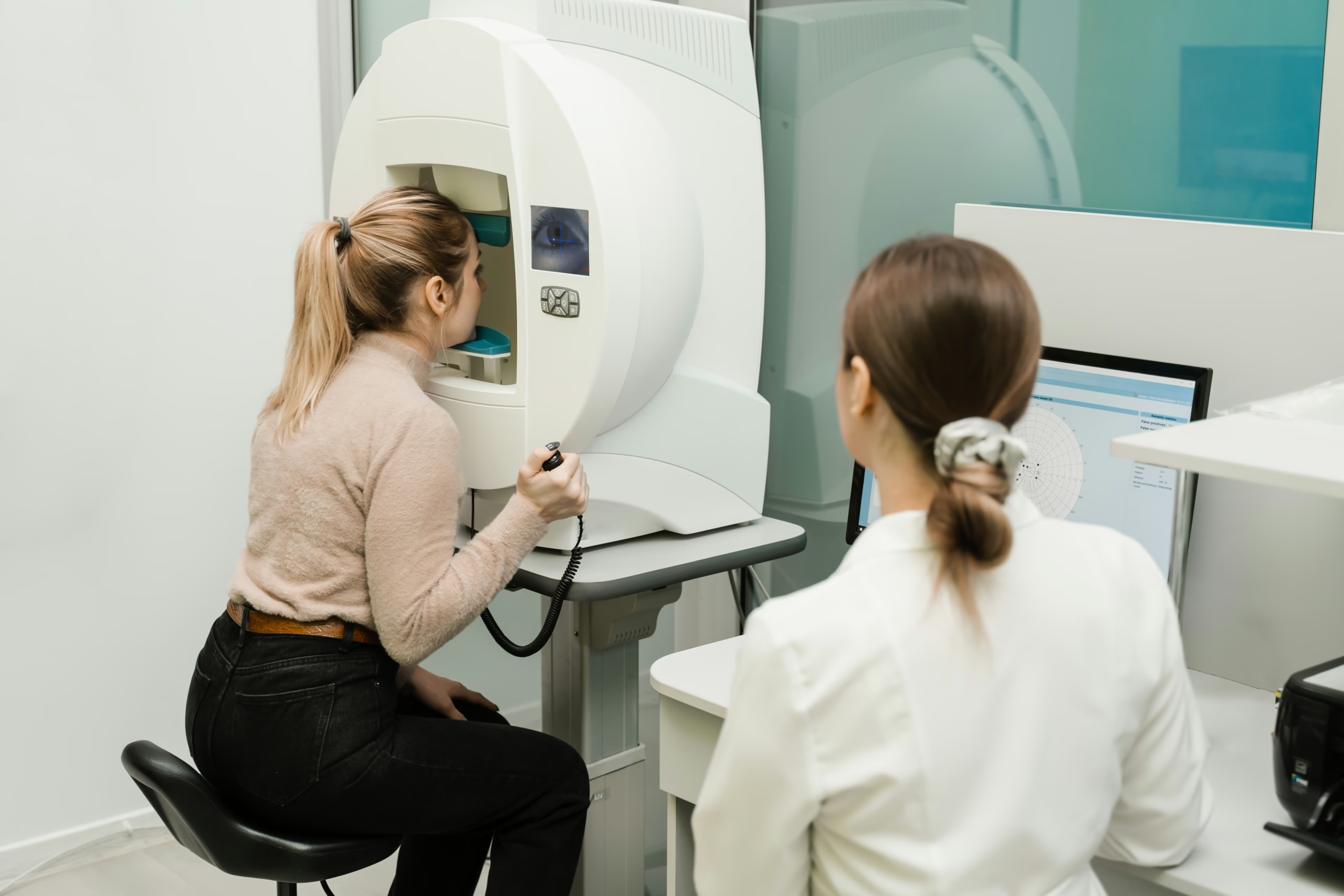
What to Expect During and After Surgery
Understanding the process can help you feel more confident and prepared for your cataract procedure. Here’s a clear breakdown of what typically happens before, during, and after surgery with the PureSee IOL.
Before Surgery
Before your procedure, your ophthalmologist will perform a series of detailed eye measurements to determine the exact lens power needed for optimal vision correction. These tests assess the shape of your eye, corneal curvature, and overall eye health to ensure accuracy.
You’ll also have a discussion about your lifestyle, daily activities, and vision expectations. This step is important because it helps align the lens choice—such as PureSee IOL—with how you actually use your vision, whether for work, driving, or screen time.
During Surgery
Cataract surgery is a quick and minimally invasive outpatient procedure, usually completed within 15 to 30 minutes. During the operation, your clouded natural lens is carefully removed and replaced with the PureSee IOL through a small incision.
The procedure is typically painless, as local anesthesia is used to keep you comfortable. Most patients remain awake but relaxed, and you can go home the same day without the need for hospitalization.
After Surgery
Recovery is generally smooth, but your vision will improve gradually as your eye heals and adapts to the new lens.
- Many patients notice clearer vision within the first few days after surgery
- Full recovery and visual stabilization may take a few weeks
- Follow-up appointments are scheduled to monitor healing and ensure the lens is functioning as expected
It’s normal to experience a short adjustment period where your vision continues to sharpen over time. Following your doctor’s post-operative instructions—such as using prescribed eye drops and avoiding strenuous activities—plays a key role in achieving the best possible results.
Are There Any Side Effects?
PureSee IOL is designed to minimize visual disturbances, but like any medical procedure, it may come with some temporary effects.
Common experiences include:
- Mild dryness or irritation
- Slight adjustment period for vision clarity
Compared to multifocal lenses, PureSee generally has a lower incidence of halos and glare, making it a preferred option for patients sensitive to these effects.
How Long Does PureSee IOL Last?
The PureSee IOL is designed to be a permanent solution. Once implanted, it does not need to be replaced and can last a lifetime.
However, regular eye check-ups are still important to monitor overall eye health, especially as you age.
Is PureSee IOL Worth It?
For many patients, the value of PureSee IOL lies in its balance. It offers improved visual range without the trade-offs often associated with other premium lenses.
If your lifestyle involves a mix of activities—like working, driving, and using digital devices—this lens can provide consistent and reliable vision. While it may not completely eliminate the need for reading glasses, it significantly reduces dependence on them.
Conclusion
Choosing the right intraocular lens is a key part of achieving the best outcome from cataract surgery. The PureSee IOL stands out for its ability to deliver a smooth, natural range of vision while minimizing common visual disturbances.
From my perspective, it’s a practical option for patients who want clarity without overcomplicating their visual experience. It doesn’t try to do everything perfectly—but it does a lot of things well, especially for everyday life.
If you’re considering cataract surgery, it’s worth having a detailed discussion with your eye specialist about whether PureSee IOL aligns with your needs. MiVision Eye Care focus on personalized assessments, helping patients understand their options clearly before making a decision. Taking that step can make a big difference in choosing a lens that truly fits your lifestyle.