
Who Is a Good Candidate for LASIK Eye Surgery?
As an eye doctor practicing in Saginaw, one of the most common questions I hear from patients is whether LASIK eye surgery is right for them. Many people are tired of glasses or contact lenses, but they’re unsure if they qualify—or if LASIK is even safe for their eyes. My goal with this guide is to give you clear, honest answers so you can make an informed decision about your vision.
LASIK is not a one-size-fits-all procedure. While it has helped millions of people achieve clearer vision, candidacy depends on several important factors. Understanding these factors is the first step toward knowing who is a good candidate for LASIK eye surgery and whether this procedure aligns with your eye health and lifestyle.
What LASIK Eye Surgery Is Designed to Correct
LASIK eye surgery works by reshaping the cornea so that light entering the eye focuses properly on the retina. When done on the right patient, LASIK can significantly reduce or eliminate the need for glasses or contact lenses.
In my practice, LASIK is commonly used to correct:
- Nearsightedness (myopia)
- Farsightedness (hyperopia)
- Astigmatism
However, having one of these vision conditions alone does not automatically make someone eligible. A comprehensive eye evaluation is always necessary to determine who is a good candidate for LASIK eye surgery based on individual eye structure and overall eye health.


Age and Vision Stability Matter
One of the first things I assess when evaluating a patient for LASIK is age. Generally, LASIK is best suited for adults 18 years or older, but age alone isn’t enough. Your vision prescription must also be stable.
If your glasses or contact lens prescription has changed significantly within the past year, LASIK may not be recommended yet. Vision stability ensures that the correction we perform today will remain effective long term. In my experience, patients who wait until their prescription has stabilized are much more satisfied with their results.
Healthy Eyes Are Essential for LASIK
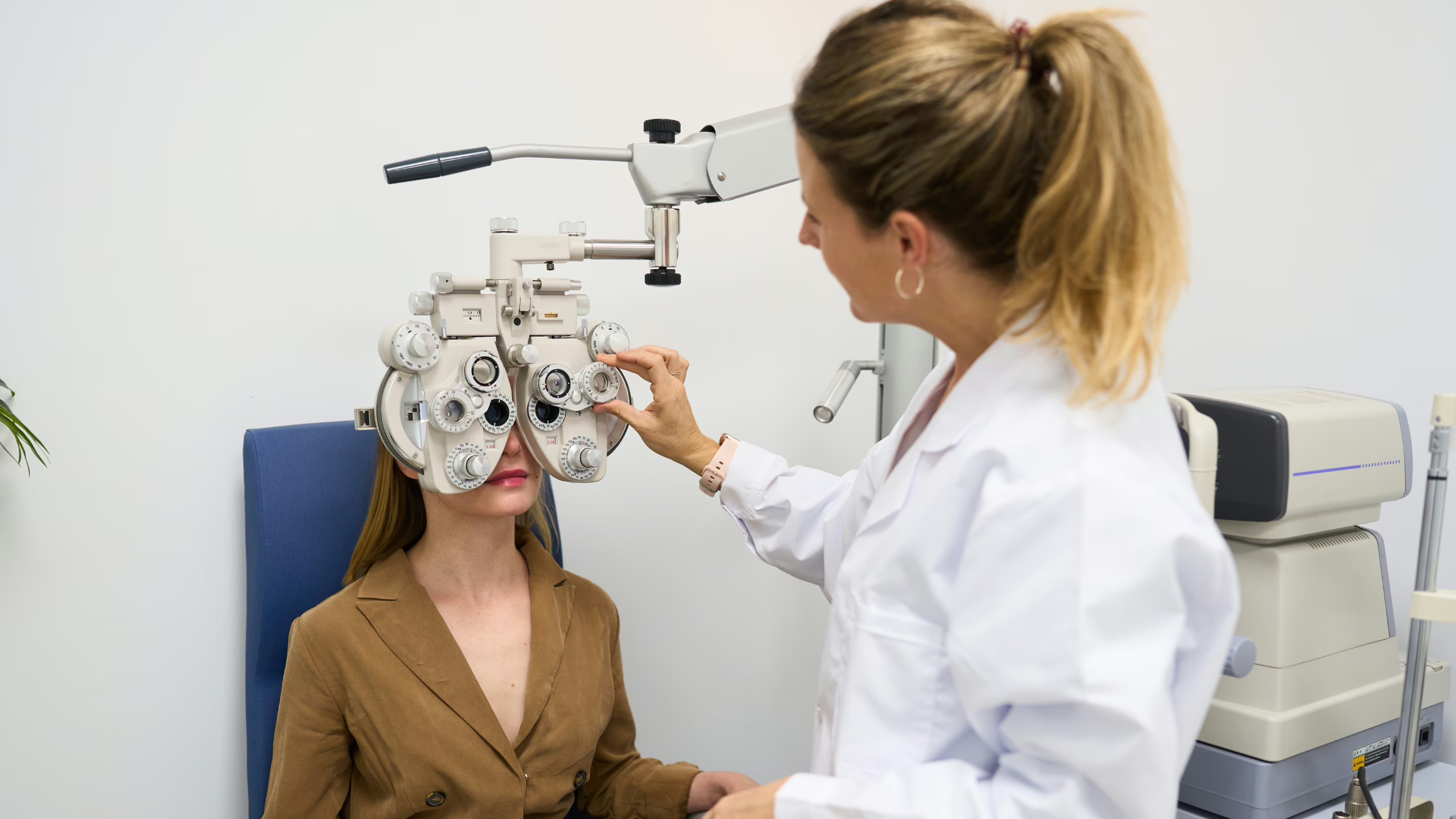
Another critical factor is overall eye health. LASIK requires healthy corneas, as the procedure reshapes corneal tissue. During a LASIK evaluation, I carefully check for conditions that may disqualify a patient or require alternative treatment options.
You may not be a good candidate if you have:
- Advanced dry eye disease
- Keratoconus or corneal thinning
- Significant corneal scarring
- Active eye infections or inflammation
- Uncontrolled glaucoma
That said, many patients assume they’re not eligible when they actually are. This is why a detailed exam is so important. Determining who is a good candidate for LASIK eye surgery can only be done accurately through proper testing—not assumptions.
General Health and Medical Considerations
Your overall health plays a role in LASIK candidacy as well. Certain medical conditions can affect healing after surgery. Autoimmune disorders, uncontrolled diabetes, and some medications may impact how well your eyes recover.
As a doctor, I always take the time to review a patient’s full medical history. Safety comes first. If LASIK is not the best option, I will explain why and discuss alternatives that may be safer or more effective for your situation.
Lifestyle and Expectations Are Just as Important
Being a good LASIK candidate isn’t only about eye measurements—it’s also about lifestyle and expectations. Patients who benefit most from LASIK understand both its advantages and its limitations.
LASIK can greatly reduce dependence on glasses or contacts, but it does not stop natural aging changes such as presbyopia. Many patients over 40 will still need reading glasses at some point. I make it a priority to explain this clearly, so expectations are realistic.
Patients who are happiest after LASIK are those who:
- Want visual freedom for work or hobbies
- Are comfortable with a brief recovery period
- Understand that results vary slightly from person to person
- Value long-term eye health over quick fixes
When expectations are aligned, outcomes are consistently positive.
Who LASIK May Not Be Right For
Not everyone is an ideal LASIK candidate—and that’s okay. In fact, being told LASIK isn’t recommended can be a sign of responsible, patient-centered care.
LASIK may not be suitable if:
- Your prescription is very high or unstable
- Your corneas are too thin
- You are pregnant or nursing
- You have certain chronic eye conditions
In these cases, I often discuss alternatives such as PRK, implantable lenses, or customized vision correction plans.
Why a Professional Evaluation Makes the Difference
Online quizzes and general guidelines can be helpful, but they cannot replace a professional eye exam. Every eye is unique. Two people with the same prescription may have completely different LASIK eligibility based on corneal shape, thickness, and tear quality.
If you’re wondering who is a good candidate for LASIK eye surgery, the most accurate answer will always come from a thorough consultation. During a LASIK evaluation, I use advanced diagnostic technology to assess your eyes in detail and explain findings in a way that’s easy to understand.
My Approach as an Eye Doctor in Saginaw
As an eye doctor serving the Saginaw community, I believe patient education is just as important as treatment. LASIK is an elective procedure, and that means patients deserve transparency, not pressure.
My approach is simple:
- Evaluate carefully
- Educate honestly
- Recommend what’s best for your eyes
If LASIK is right for you, I’ll explain why. If it’s not, I’ll guide you toward better options. Either way, the goal is long-term visual health and confidence in your decision.
Final Thoughts
LASIK eye surgery can be life-changing for the right patient, but candidacy depends on more than just wanting better vision. Eye health, prescription stability, lifestyle, and expectations all play a role in determining who is a good candidate for LASIK eye surgery.
If you’re considering LASIK and want clear, professional guidance, start with a comprehensive eye evaluation. Understanding your eyes is the first step toward seeing your best—safely and confidently.