
Can Cataracts Come Back After Surgery? What Mt. Pleasant Patients Should Know
If you’re considering cataract surgery — or you’ve already had it — one question naturally comes up:
Can cataracts come back after surgery?
It’s one of the most common concerns we hear from patients in Mt. Pleasant. Vision is personal. And when you invest in surgery to restore clarity, you want to know the results will last.
The short answer?
No — cataracts do not grow back after surgery.
But there’s an important detail you need to understand.
Let’s break it down clearly.
What Exactly Is a Cataract?
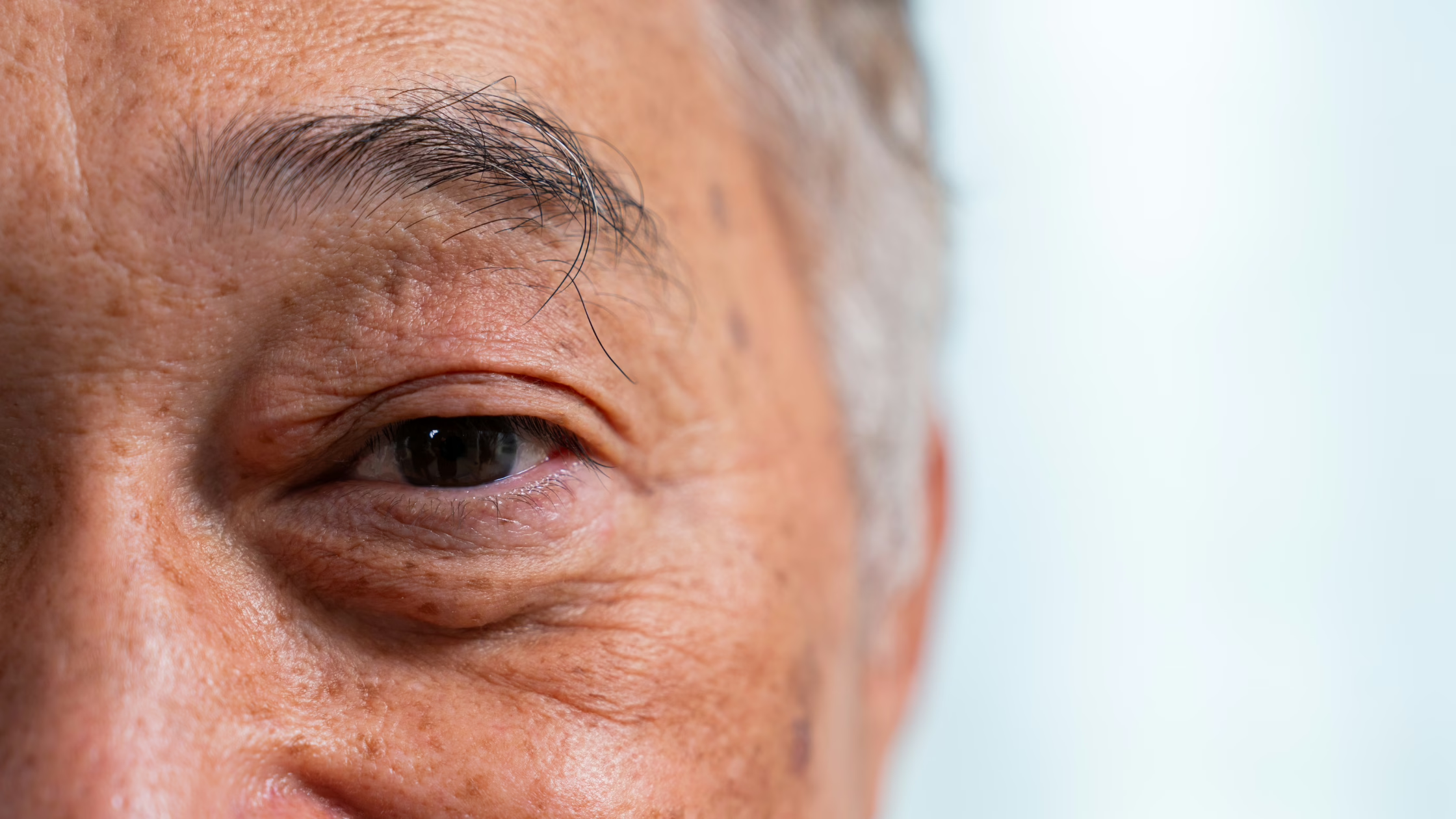
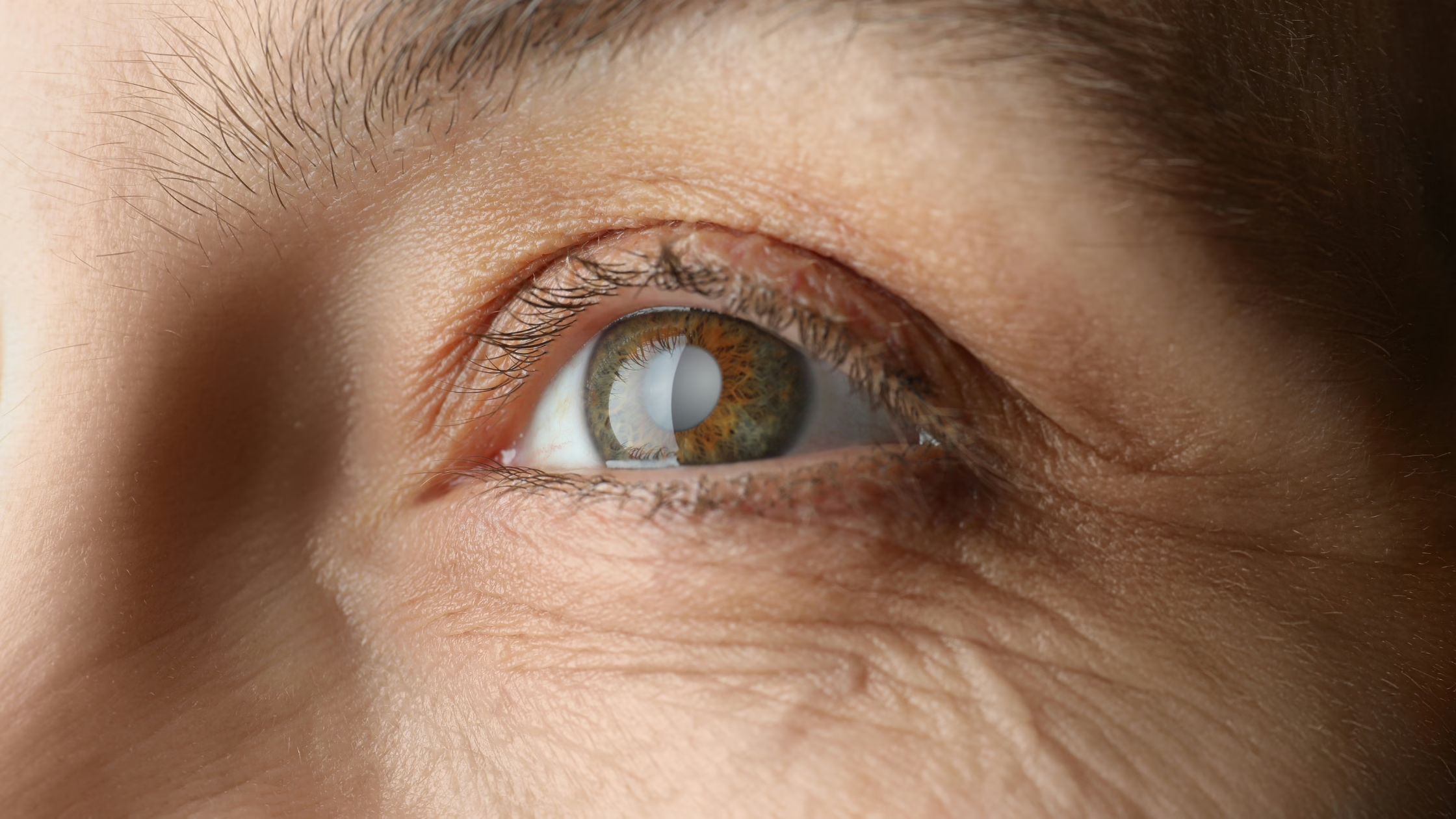
A cataract forms when the natural lens inside your eye becomes cloudy. This clouding happens gradually and is most often related to aging. Over time, vision becomes blurry, dim, or hazy — almost like looking through a fogged window.
Common symptoms include:
- Blurry or cloudy vision
- Increased glare from headlights
- Difficulty seeing at night
- Faded colors
- Frequent prescription changes
Cataracts are extremely common in adults over 60, and many patients in Mt. Pleasant begin noticing symptoms during their retirement years.
How Cataract Surgery Works
During cataract surgery, the cloudy natural lens is removed and replaced with a clear artificial lens called an intraocular lens (IOL).
Here’s what’s important:
- The natural lens that developed the cataract is completely removed.
- The artificial lens cannot develop a cataract.
- The procedure is safe, precise, and typically takes less than 30 minutes.
Because the original lens is gone, the cataract itself cannot come back.
So why do some patients feel like it has?
So, Can Cataracts Come Back After Surgery?
No, cataracts cannot come back after surgery.
However, some patients develop something called posterior capsule opacification (PCO) — often referred to as a “secondary cataract.”
It is not actually a cataract.
After surgery, the artificial lens is placed inside a thin membrane called the lens capsule. Months or even years later, this membrane can become cloudy. When it does, vision may seem blurry again — similar to how it felt before cataract surgery.
This is likely why many people ask, “Can cataracts come back after surgery?”
The confusion is understandable, but medically speaking, the original cataract does not return.
What Is Posterior Capsule Opacification (PCO)?
Posterior capsule opacification occurs when cells left behind after surgery grow over the back of the capsule holding the new lens.
Symptoms may include:
- Blurry vision
- Glare or halos around lights
- Decreased sharpness
- Trouble reading
PCO is common and can affect up to 20–30% of cataract patients over time. It can develop months or even several years after surgery.
The good news? It is easy to treat.
How Is Secondary Clouding Treated?
Treatment for posterior capsule opacification is simple and quick.
A procedure called a YAG laser capsulotomy is used to restore vision. During this treatment:
- A laser creates a small opening in the cloudy capsule.
- Light can pass through clearly again.
- Vision improves almost immediately.
The procedure takes only a few minutes, requires no incisions, and is painless. Most patients in Mt. Pleasant return to normal activities the same day.
And once this laser treatment is done, the clouding typically does not return.
How Long Does Cataract Surgery Last?
Another common concern is longevity.
Since the artificial lens does not age or become cloudy, cataract surgery is considered permanent. The results typically last a lifetime.
Patients may still need glasses for certain tasks depending on the type of lens implant chosen. However, the removal of the cataract itself is permanent.
For many Mt. Pleasant patients, cataract surgery significantly improves independence, driving ability, reading comfort, and overall quality of life.
Are There Risk Factors for PCO?
While posterior capsule opacification can happen to anyone, certain factors may slightly increase the chances:
- Younger cataract patients
- Diabetes
- Eye inflammation
- Certain surgical variables
Even so, it is not considered a complication — it is a manageable and treatable part of the healing process for some individuals.
When Should You See an Eye Doctor in Mt. Pleasant, MI?
If you’ve had cataract surgery and begin noticing:
- Gradual blurring of vision
- Increased glare
- Difficulty reading again
It’s important to schedule an evaluation.
Many patients worry that something has gone wrong or that cataracts have returned. In most cases, it’s simply posterior capsule opacification, which can be corrected quickly with laser treatment.
If you are experiencing symptoms of cataracts for the first time — such as cloudy vision or trouble seeing at night — early evaluation is key. Cataracts develop slowly, and surgery is only recommended when vision begins interfering with daily life.
Final Thoughts: Can Cataracts Come Back After Surgery?
Let’s answer it clearly one more time.
Can cataracts come back after surgery?
No — the original cataract cannot return because the natural lens is removed.
If vision becomes cloudy again, it is likely posterior capsule opacification, which is easily treated with a quick laser procedure.
Cataract surgery remains one of the safest and most successful procedures performed today.
For patients in Mt. Pleasant, we recommend MiVision Eye Care for advanced, patient-centered cataract care. With our upcoming office expansion in the Mt. Pleasant area and to perform surgeries two days a month locally, we’re excited to see greater access to high-quality surgical care right here in our community.